
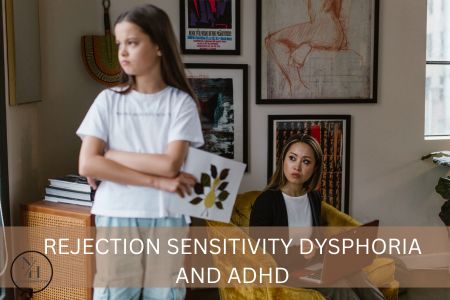
Most people think that ADHD (Attention Deficit Hyperactivity Disorder) is just about not being able to sit still. The truth is, it can also manifest as hyperactivity in thoughts, and if only all these thoughts were sunshiny, it would be so much easier to go through life with ADHD. The sad reality is, these thoughts have a greater tendency of leaning towards the negative, thanks to the greater number of times that the ADHD child was likely corrected and reprimanded (compared to his neurotypical peers) throughout childhood—and throughout all of life, for that matter!
Enter Rejection Sensitivity Dysphoria (RSD), a debilitating thought loop that a majority of ADHDers report experiencing. It also shows up in a big percentage of autistic individuals, as well as AuDHDers, or autistic people who have co-occurring ADHD.
RSD is essentially a heightened sensitivity to rejection, both real and perceived. Note the word ‘perceived.’ That means that the other person may not have the slightest intention of rejecting the ADHDer, but the latter ‘perceives’ rejection—and spirals into the RSD thought loop.
RSD shows up in both children and adults with ADHD.
Some ways RSD manifests in children and adults
- A quick tendency to feel left out in social interactions, whether or not the others intended it
- Sensitivity or defensiveness to feedback, including constructive criticism, no matter how softly packaged
- A sudden explosive reaction to criticism
- Low self-esteem or trouble appreciating your own strengths
- A tendency to replay conversations and social interactions, wondering if something you did was wrong
- When something goes wrong or someone is upset, you automatically assume it’s your fault
- Silence feels paralyzing—a late reply to a text or chat can send you imagining worst-case scenarios
Before learning about my own neurodivergence, I didn’t understand why I had the tendency to crash and ruminate after certain social interactions—especially those where somebody gave unsolicited feedback, constructive criticism, even, and I found myself getting defensive. I hated the feeling, but didn’t know what to do with it. I used to think I just had an ego problem with not being able to accept helpful feedback, and beat myself up for it, then tried to grit my teeth through them.
Also, as a homeschooling family, one of our kids would explode every time I tried to correct his work, which in turn would get me all riled up. It wasn’t a pretty picture.
But when I learned about RSD, it gave me a framework through which to understand my own reactions, and I’ve been on a journey of identifying RSD whenever it shows up so that I look at the situation from a bigger perspective. It also helped our family understand why our second son had what seemed like extreme reactions to minor comments, so we can be more sensitive to his needs.
It’s not a magic bullet, but acknowleding when a negative reaction is caused by RSD is the first step towards self-compassion. And boy, do NDs need a lot of that!
How has RSD come up for you or family members with ADHD? Share them in the comments below!